Odaban Blog


Antiperspirant
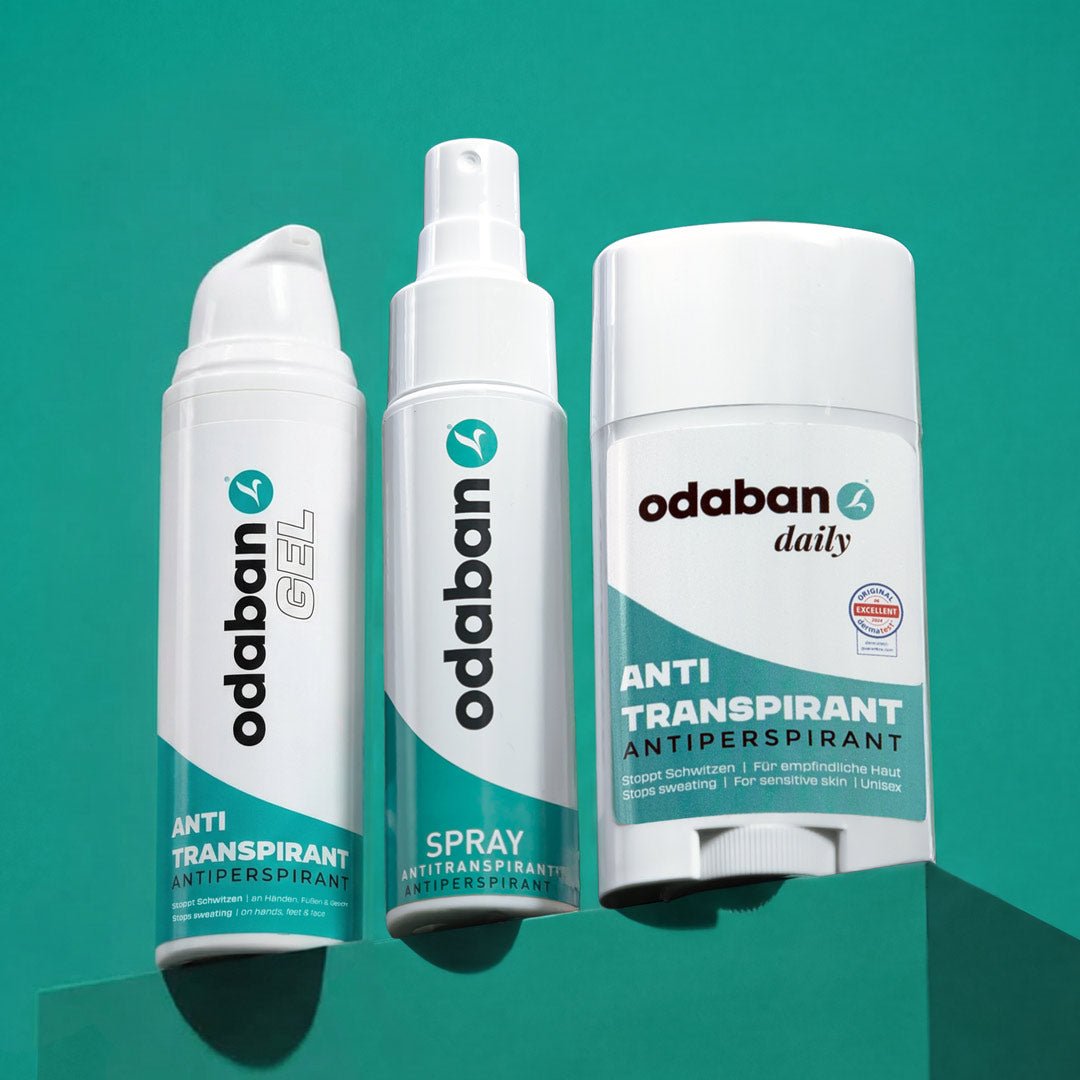
What is an Antiperspirant? An antiperspirant (also known by the English term antiperspirant) inhibits sweat production. Antiperspirants have been used against excessive sweating for over 100 years. Their advantage over other measures lies in their purely superficial mode of action. Aluminum chloride, the active ingredient in Odaban antiperspirant, narrows the openings of the sweat glands in the skin. As a result, less sweat is secreted, keeping skin and clothing dry. The insolubility of the aluminum complex prevents absorption into the deeper layers of the skin, so the treatment is actually limited to the outermost skin layer. The effectiveness of aluminum chloride as an antiperspirant was already demonstrated in 1972 by an experimental study conducted by skin specialist Prof. Dr. Hagen Tronnier and his colleague Rentschler. They showed that the number of active eccrine sweat glands decreased on average by 70% and sweating by 64%. How an Antiperspirant Works When applied to the skin, aluminum chloride causes the skin cells to contract (astringency). This narrows the openings of the sweat glands. Aluminum chloride consequently forms a complex that can be imagined as a small plug made of sweat, sebum, and skin flakes. This complex seals the openings of the sweat glands so that no sweat can reach the skin surface. After a few days, the astringency is lifted and the effect of the antiperspirant diminishes. No Sweat - No Odor When sweat comes into contact with specific microorganisms that are part of the natural skin flora, body odor is produced. Corynebacteria (especially in men) and micrococci (especially in women) break down the sweat. This process produces unpleasant-smelling substances perceived as sour to pungent. However, if sweat is not secreted at all, it does not produce odors. As an antiperspirant, Odaban promotes a natural, pleasant skin scent.
Learn more