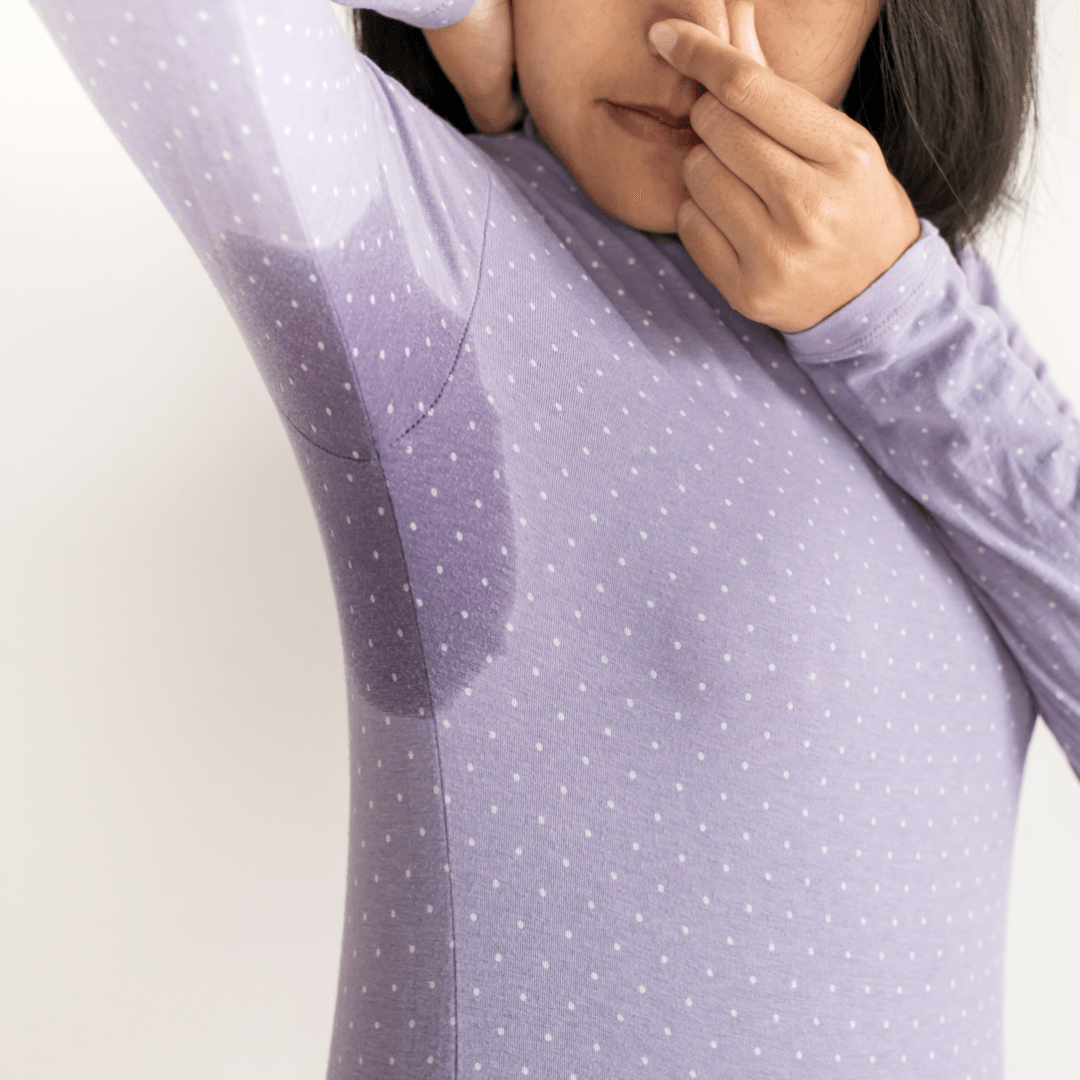
Sweating is a completely normal metabolic process of the human body, yet it can be extremely unpleasant for many people: the skin shines, sweat stains form, and eventually an unpleasant odor develops.
And yet sweating has a very simple and convincing function: to cool the body, because for the sweat to evaporate, it requires energy, which comes from the heat of the skin. Sweat consists of 99% water. The composition of sweat depends on various factors, but generally, the ion concentration is lower than that of other body fluids, such as blood, which is why it is referred to as a hypotonic fluid.
In addition to water, sweat contains a variety of salts (mainly NaCl and KCl in dissociated form), lactic acid, urea and uric acid, amino acids, carbonates such as formic acid or butyric acid, and also cholesterol, sugar, and ascorbic acid (vitamin C) in small concentrations. Furthermore, bicarbonate is present in sweat as an alkaline element.
The pH value of sweat depends on the sweat rate. With increasing sweating, the pH value rises to alkaline levels because as the sweat flow rate increases, the concentration of lactic acid decreases and the bicarbonate concentration increases. At low flow rates, however, sweat is acidic.
Excessive Sweating
Those who naturally sweat very little and are largely spared from the negative effects can consider themselves lucky. Others, however, suffer from excessive sweating. 1-2% of people in Germany are affected by excessive sweat production, regardless of temperature or time of day or year. These individuals report heavy sweating episodes in situations that are hardly psychologically stressful or even "out of the blue".
Often, up to 100 mg of sweat is produced in one armpit within five seconds.
However, this problem is not limited to the armpits; increased sweating also frequently occurs on the hands and feet.
Possible Consequences of Excessive Sweating
Those affected are often very insecure in the presence of others and hesitate to offer their sweat-dampened hand. Visible sweat stains constantly form under the armpits, and despite thorough personal hygiene, sweat odor can repeatedly occur, which can be very unpleasant for partners or in professional situations. However, besides thorough personal hygiene, there are several approaches to curb excessive sweating.
What Helps Against Excessive Sweating?
A gentle, inexpensive, and very effective method to get the sweating problem under control is aluminum chloride, which has long been available in pharmacies usually as a deodorant roll-on solution. Aluminum chloride, in an appropriate concentration, causes the ducts of the sweat glands in the treated areas to narrow. At the same time, a complex is formed that plugs the sweat outlets like a cork, effectively regulating sweating.
The media occasionally raise the question of whether aluminum in antiperspirants is harmful to health. However, since for many people only an aluminum-containing antiperspirant achieves the desired effect and the quality of life of those without an effective antiperspirant is greatly reduced, the following attempts to counter this myth.
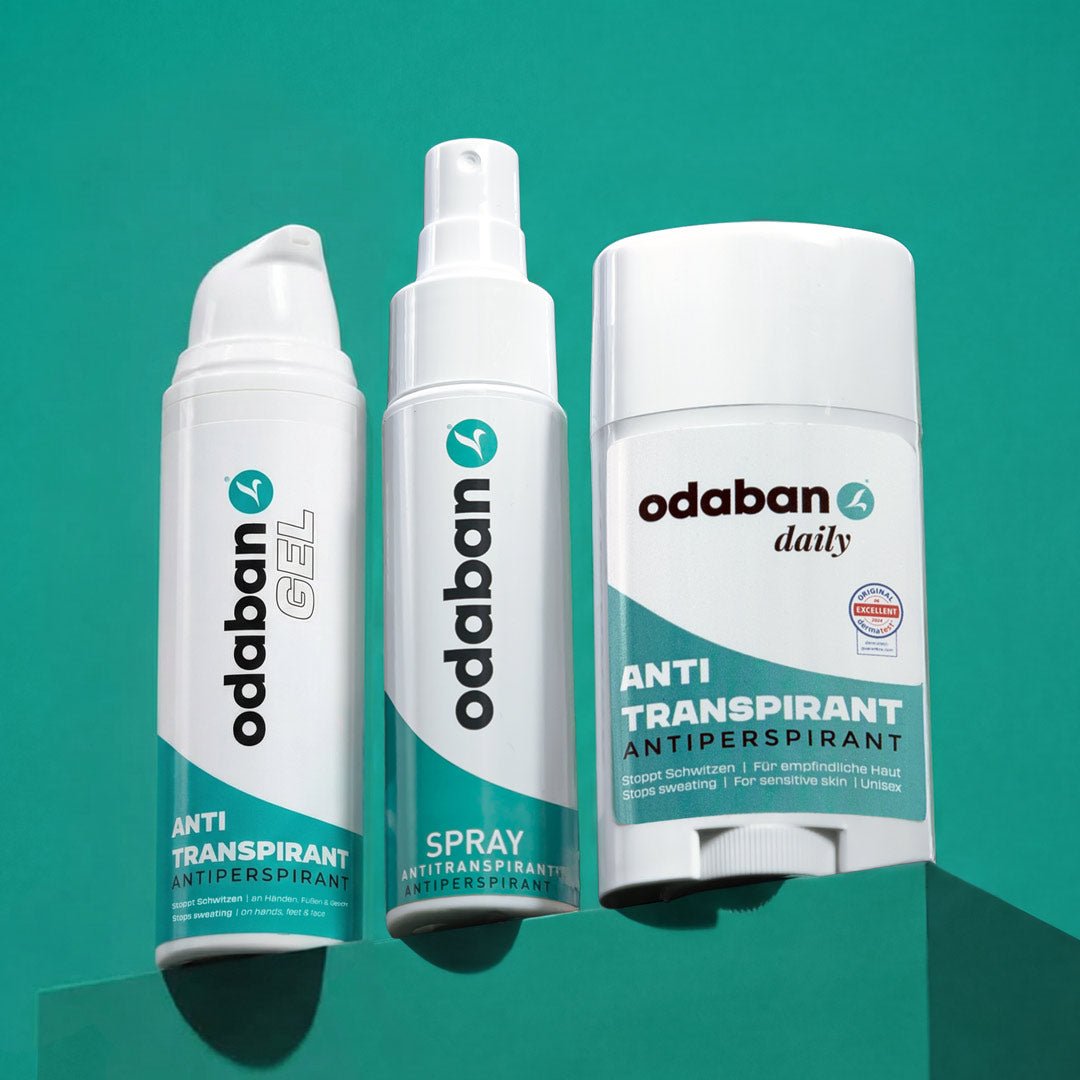
The Odaban Antiperspirant Spray , for example, releases 1.5 µg of aluminum per spray and armpit with a single application. Since Odaban Antiperspirant is applied only once or twice a week with one to two sprays per armpit each time, only about 9 µg of aluminum is released per week. This places Odaban Antiperspirant well below the systemic exposure level calculated by the Federal Institute for Risk Assessment and far below the tolerable aluminum intake for a 60 kg adult, which the Federal Institute for Risk Assessment specifies as 60.2 µg per week.
The practical ODABAN® spray is applied preventively and in minimal dosage in the evening before going to bed directly to the affected skin areas. After just one application, sweating is effectively regulated. The finely tuned formula also gently and reliably protects against skin irritations such as burning or itching. With results of up to 90% less sweat flow after only three applications, the effectiveness of Odaban® spray has been dermatologically tested and confirmed by a renowned institute. During the test, subjects who all suffered from increased sweating had one armpit treated once daily in the evening with Odaban Antiperspirant for 3 days.
The other armpit remained untreated during the test and served as a control. The subjects showed a reduction in sweat volume of up to 90% after 3 days of application, with an average sweat reduction of about 71%.
Numerous dermatology clinics and dermatologists therefore also recommend Odaban® for severe sweating.