Odaban Blog


Antitranspirant / Antiperspirant or Deodorant?
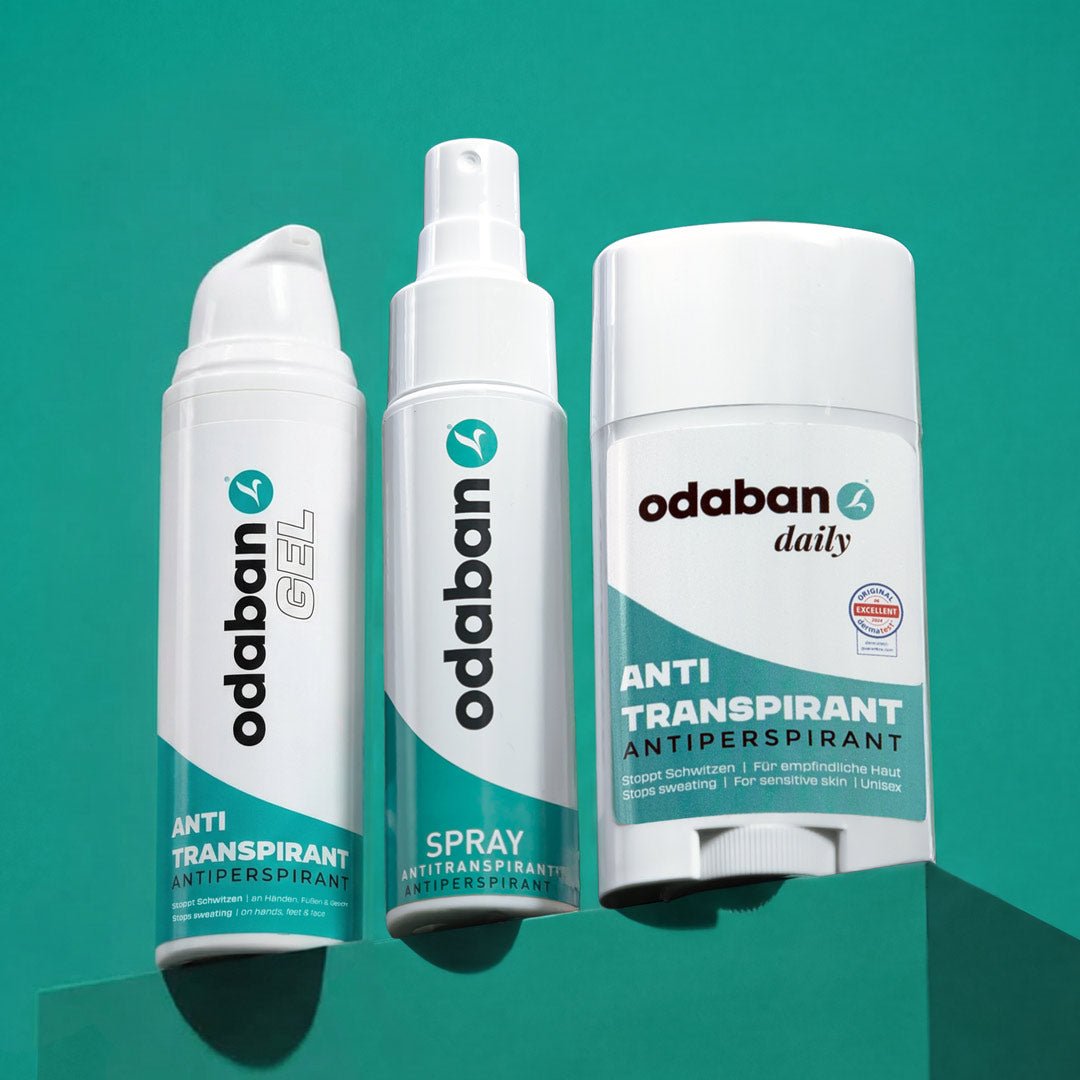
How does an antiperspirant differ from a deodorant? Antitranspirant and antiperspirant basically mean the same thing. In English, the word antiperspirant is used for an antitranspirant. However, antitranspirants / antiperspirants fundamentally differ from deodorants in their effect and application. Antitranspirants / antiperspirants reduce the amount of sweat released by forming pore plugs or redirect sweat to skin areas where perspiration can occur more easily. Deodorants contain odor-inhibiting ingredients that mostly mask or absorb the sweat odor. Although deodorants also contain sweat-inhibiting ingredients, they are usually in such small amounts that the problem of underarm wetness is not reduced by a deodorant. Differences in application between antiperspirant and deodorant Antitranspirants / antiperspirants also differ greatly from deodorants in their application: While a deodorant is applied daily, usually after morning hygiene, antitranspirants / antiperspirants are applied less frequently. ODABAN spray is only applied in the evening before going to bed. After initial daily application, the use can quickly be reduced to only 1-2 times per week. This brings great independence and freedom, as you no longer have to think about applying a deodorant every day. These differences are noticeable both in effect and price. A deodorant usually costs only a few euros, whereas antitranspirants / antiperspirants are generally more expensive depending on size and quality. However, the higher price of an antiperspirant is noticeably offset by the fact that just 30 ml of antiperspirant can last for half a year with underarm application. A deodorant, on the other hand, usually lasts only a few weeks. This effectively saves money, reduces the hassle of repurchasing, and is better for the environment.
Learn more