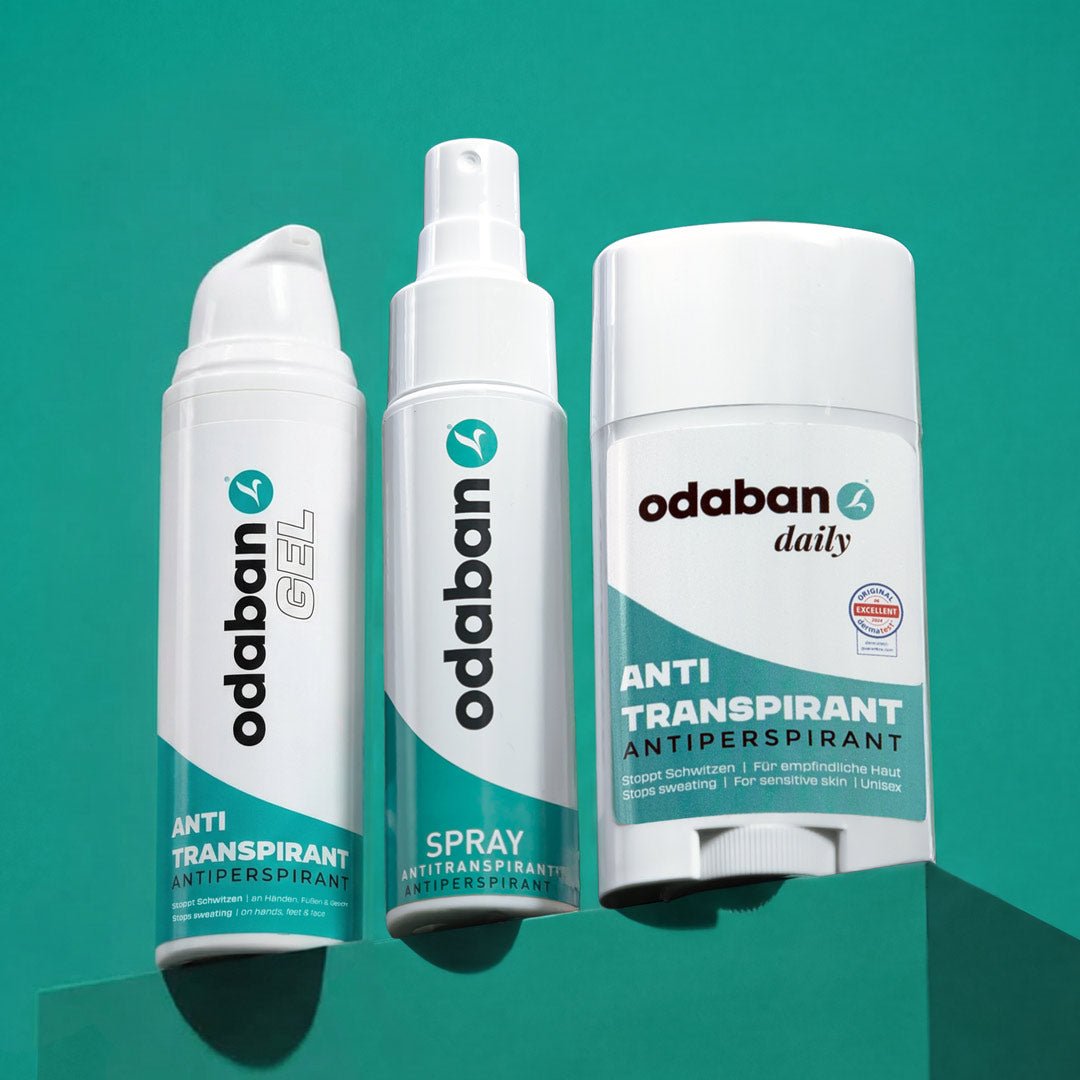
Odaban Blog
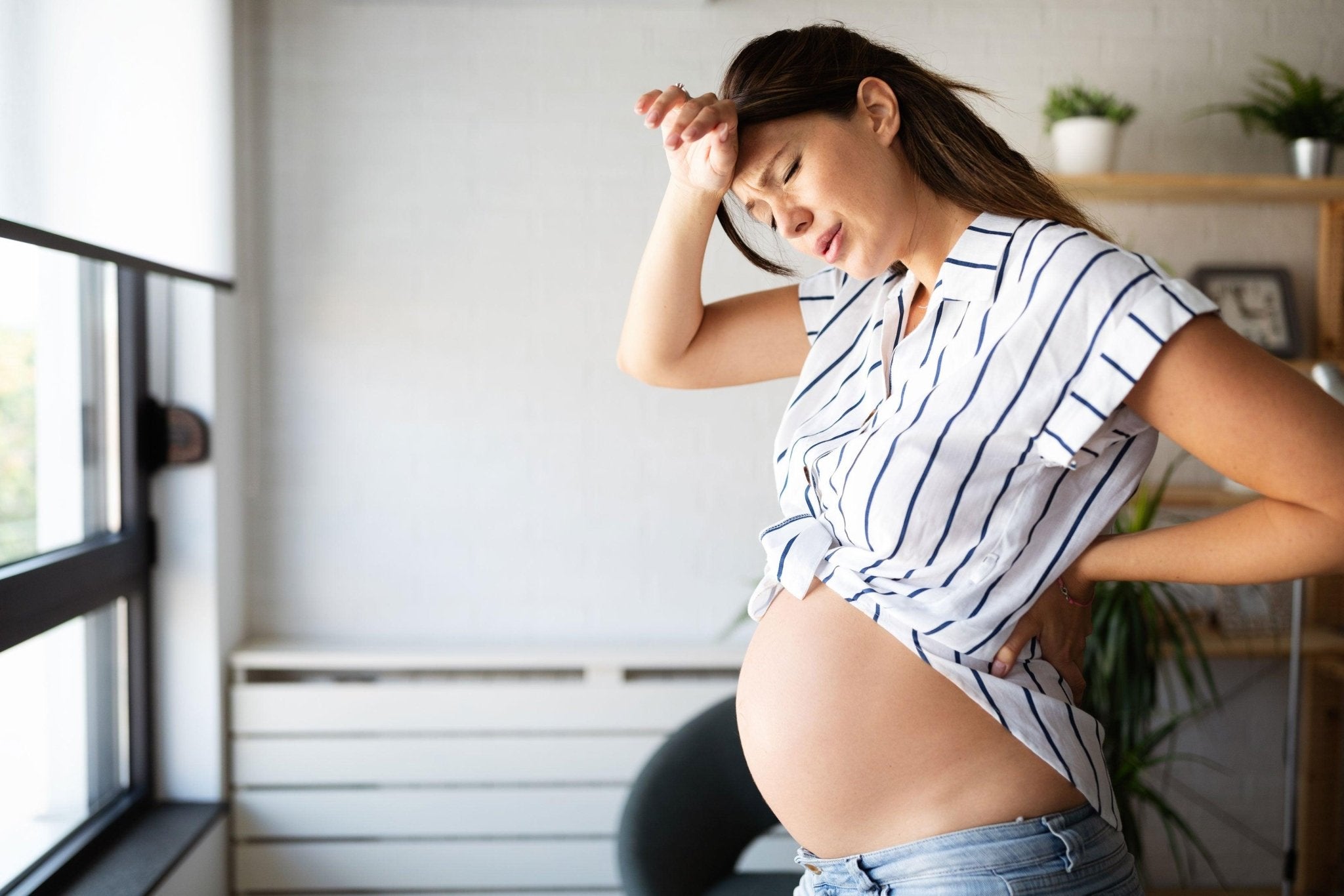

Application
Application of Odaban Antiperspirant Odaban Antiperspirant can be applied to the entire body. It must simply not come into contact with mucous membranes. It is important that Odaban Antiperspirant, regardless of the body area it is applied to, is always applied immediately before going to bed and on perfectly dry skin. Once an initial protection has been established, which usually occurs after three to five applications, Odaban Antiperspirant should only be used as needed (once or twice a week). Application of Odaban Antiperspirant on the Head You can also use Odaban Antiperspirant on the face. This is not a problem. Odaban should only not be used on irritated or inflamed skin. Odaban Antiperspirant was originally developed only for the underarm and foot areas. However, over time, various other areas of application have emerged. We have many customers who use Odaban very successfully on their face. Odaban should also only be applied in the evening when used on the face. Please never spray directly onto the face; always apply Odaban with the help of a cotton or cosmetic pad (1-2 sprays are sufficient). Please wash the treated skin areas normally the next morning. For facial application, usually once a week or as needed is sufficient. Please never treat the entire head with Odaban, but only individual affected skin areas, as sweat also has a cooling function. We recommend testing Odaban Antiperspirant on a small area first if you have sensitive skin before applying it more extensively. Application of Odaban Antiperspirant During Pregnancy or Breastfeeding Odaban Antiperspirant is a "cosmetic product." By law, cosmetic products must always be safe, including for expectant and nursing mothers. Odaban underwent several safety assessments before its market launch in Germany, all of which were positive. Therefore, you can use Odaban Antiperspirant without concern during pregnancy and breastfeeding. When Not to Use Odaban Antiperspirant An antiperspirant should not be used during the day. The simple reason is that sweating increases during the day. As a result, the active ingredient aluminum chloride reacts with water to form a byproduct, which can cause unpleasant skin irritation. Therefore, daytime use is not recommended. It is also not advisable to use an antiperspirant immediately after freshly shaving the underarms, as this causes very small injuries to the skin surface and can lead to skin irritation after applying an antiperspirant. What to Avoid When Using Odaban Antiperspirant A very important aspect when using Odaban Antiperspirant is that the skin must be absolutely dry at the time of application. There must be no residual moisture in the underarm. If there is still residual moisture in the underarm, the product’s effect cannot fully develop, and residual moisture can cause skin irritation, itching, or burning. Many first-time users of Odaban Antiperspirant often have the problem that they still sweat a little in the evening, meaning some residual moisture is almost unavoidable. We recommend applying Odaban Antiperspirant immediately before going to bed and drying the underarms beforehand with a little talcum powder or a hairdryer. This ensures no residual moisture remains in the underarms. Another common mistake is applying too much Odaban Antiperspirant per application. One spray per underarm is completely sufficient. For sensitive skin, we always recommend applying it with a cotton or cosmetic pad. Please wash off any product residue normally the next morning. After an "initial protection" has been established, Odaban Antiperspirant should only be used once or twice a week. Additionally, Odaban Antiperspirant should not be used too frequently, as the spray will not achieve the desired effect. The reason is that with too frequent use, the sweat gland openings become completely "blocked." The sweat that accumulates behind this blockage will eventually break through it. Consequently, increased sweating will occur again. If this does happen, Odaban Antiperspirant should not be used for about two to three weeks. After this application-free interval, the effect will be as it was at the beginning of use. Thus, Odaban remains a very effective, safe product for a long time.
Learn more
Causes and reasons for excessive sweating
The human body has about 3 million so-called eccrine sweat glands, which are responsible for temperature regulation and thus protect the body from overheating. They are located at the junction of the dermis and subcutaneous tissue. But how exactly does temperature regulation work? It’s quite simple. The wet sweat that emerges from the pores evaporates on our skin, creating a cooling effect. This is also known as evaporative cooling. Sweating is therefore a vital process. Even during energy production, when nutrients are burned, so much heat is generated that the body temperature inside the body would actually have to rise by about one degree per hour. Heat, physical exertion, and excitement can further increase body temperature. To prevent all these factors from causing the body to overheat, the body produces sweat – our natural and bodily cooling agent. However, some people’s sweat glands produce unnecessarily large amounts of this cooling agent. They sweat continuously and extremely heavily, even without being exposed to particular physical exertion, for example. The actual causes and reasons for excessive sweating are diverse and often difficult to identify. Excessive sweating from unknown causes For reasons not yet clarified, some people’s sweat glands produce sweat more frequently than is actually necessary for temperature regulation and energy production. It is suspected that an overfunction of the sweat glands or an overactivity of the sympathetic nervous system, which controls sweat gland production, is the underlying cause. Those affected often sweat in attacks and up to several times a day. The sweating attacks are usually limited to certain body regions, such as the armpits, soles of the feet, back, scalp, or forehead. For some people, even slight stimuli are enough to make the body start sweating. For others, sweating occurs suddenly and without a prior trigger. The intensity of sweating also varies significantly: the disorder ranges from beads of sweat on the forehead and dark sweat stains under the armpits to actual streams of sweat. Those affected are usually only troubled by the unpleasant sweating attacks during the day. At night, however, they often have no complaints. Stress as a trigger for excessive sweating Stress and emotional strain are considered one of the main causes of excessive sweating. In a milder form, almost everyone knows this phenomenon: when you are tense, excited, or nervous, the body can start to sweat. Damp, shaky hands and a few small beads of sweat at the hairline are a completely normal reaction of the body to a stressful situation. If someone is under constant pressure, this can also affect sweating. Many people who are under chronic stress complain of sudden sweating attacks, even at night. The psyche plays a decisive role in this context. Chronic stress negatively affects mental well-being and can lead to depressive moods, sleep disorders, and nervousness, among other things. Due to the psychological strain, the body consequently releases more stress hormones, which in turn give the command to produce sweat. Hormonal changes during pregnancy and menopause In addition, hormonally induced changes can also be a reason for increased sweating. During pregnancy or menopause, excessive sweating is therefore not uncommon. Especially during menopause, many women complain of sudden sweating attacks and increased sweating. It is assumed that the cause lies in the declining estrogen levels. This disrupts the hormonal balance and the body’s temperature regulation works inaccurately: the brain sends a cooling signal even though it is not actually necessary. Excessive sweating can also occur during pregnancy. Here too, hormonal changes in the body play a decisive role. The female body now has to supply not just one person but two sufficiently with nutrients. The result: the blood circulation is stimulated and body temperature rises. To compensate for the temperature increase and protect the body from overheating, sweat production is increased. Those who feel uncomfortable can counteract this with light clothing made of natural fibers and a conscious, balanced diet – but fundamentally, this is a completely normal bodily reaction. Unhealthy lifestyle Besides the causes just mentioned, lifestyle often plays a major role. To counteract excessive sweating, one should first take a close look at their own lifestyle. Do I move enough? Do I exercise? Do I eat healthily? Do I have too much stress? All these are factors that can influence sweat production. Often, it is spicy foods, too much coffee, or alcohol that rev up sweat production. Overweight is also a common cause because the extra pounds make even small movements difficult, so the body reacts even to minor exertion. However, if someone sweats excessively despite a healthy lifestyle or notices a change, they can seek advice from a general practitioner or dermatologist.
Learn more